

 Bank payments
 Card payments
 Apple Pay / Google Pay
 POS terminals
 Buy Now, Pay Later
 Shipping+ and Shipping+ Pro
 Click to pay
 Refunds
 Recurring payments
 Payment link
 Donations
 Kniks gift card
 Merchant financing
 Payments for accommodation businesses
 Payments for service businesses
Shopify Shipping+ module setup
By using our module, you can add parcel locker and courier delivery menus and create automatic shipment registration with Omniva, DPD, SmartPosti, Unisend, and Venipak.
Preparation
Before installation, make sure that:
- You have an active MakeCommerce account
- Your Shopify store is active
- Your store currency in Shopify settings is set to EUR
- Your store location in Shopify settings is in Europe
If you are not yet a MakeCommerce client, contact us or fill in the application form.
Already using the old module?
Start with the migration section, then continue with the delivery-method and carrier setup steps in this tutorial.
🧩 App installation
1. Install the app
- To install the MakeCommerce Shipping+ app, go to this link: https://apps.shopify.com/makecommerce-shipping-solution
- The Shopify page will open, where you need to click Install:
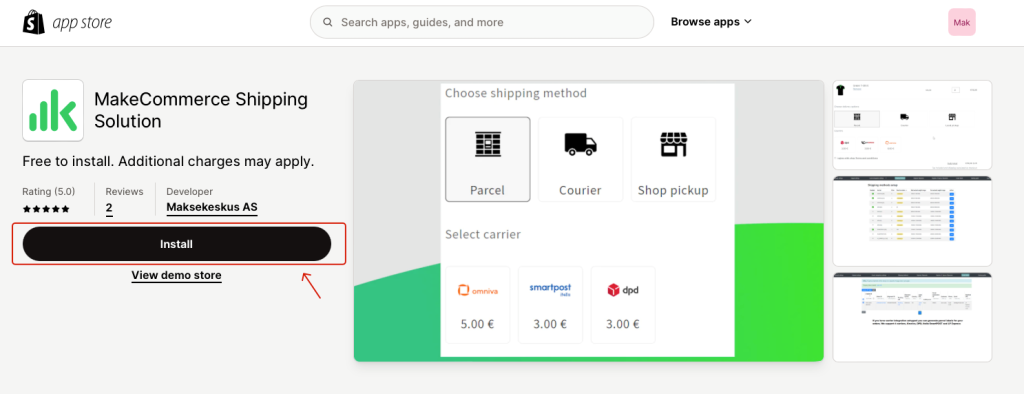
- Next, click Install again:
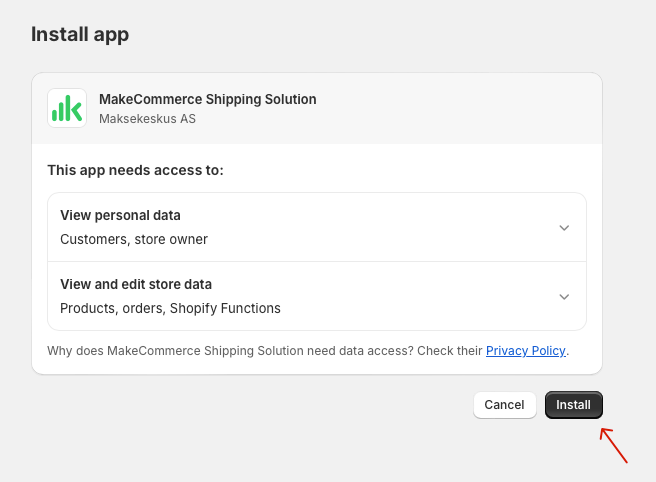
2. Enter API keys
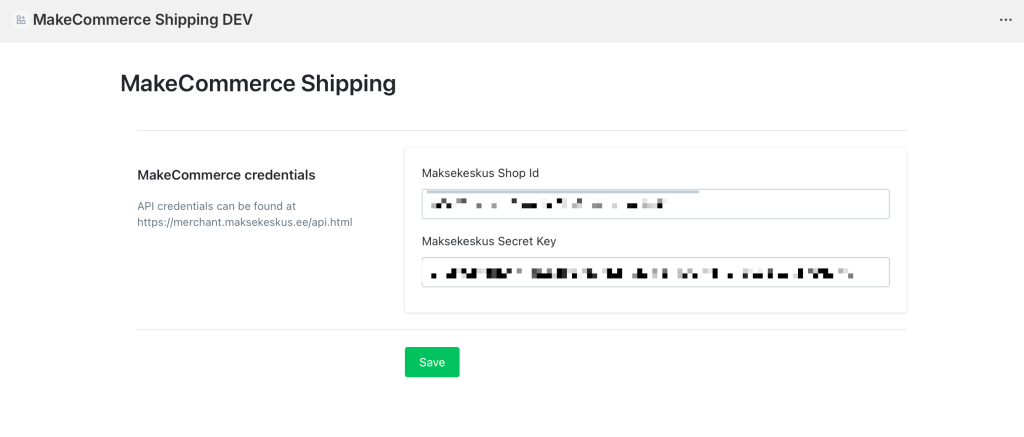
After installing the module, it should open automatically. Here you need to enter your MakeCommerce API keys:
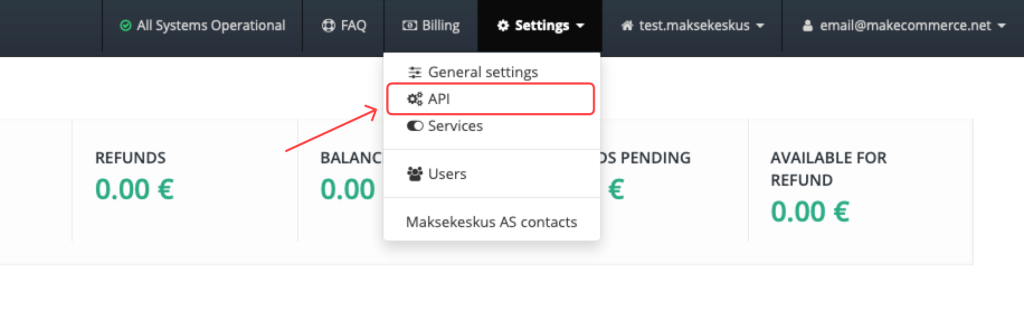
To get your LIVE production API keys, you must be our client and retrieve them from the merchant portal under Settings -> API:
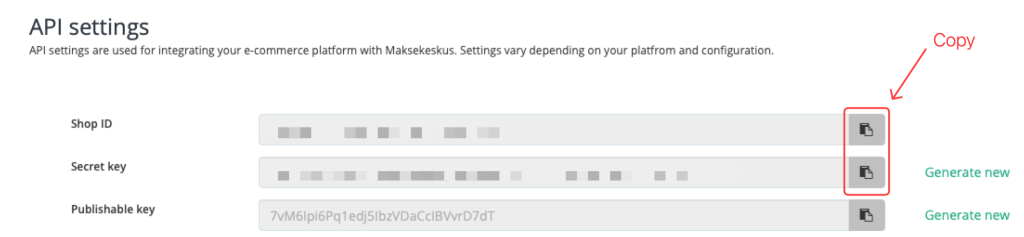
* If you want to make test payments using your individual test account, you can request access from the MakeCommerce team. Test API keys are different from live environment keys.
3. Complete store details
Next, you need to enter the store name, phone number, email address, and address.
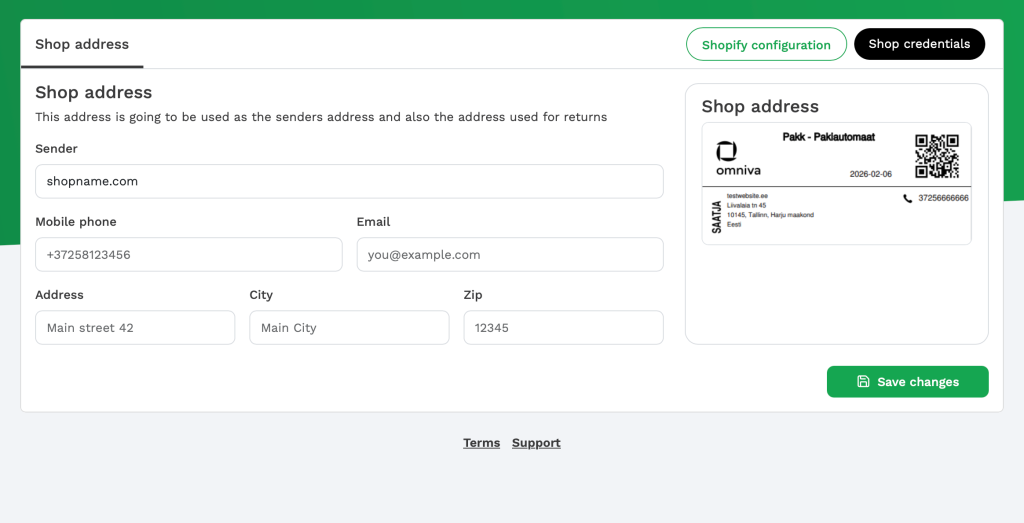
The module has been installed successfully if you reach this screen:
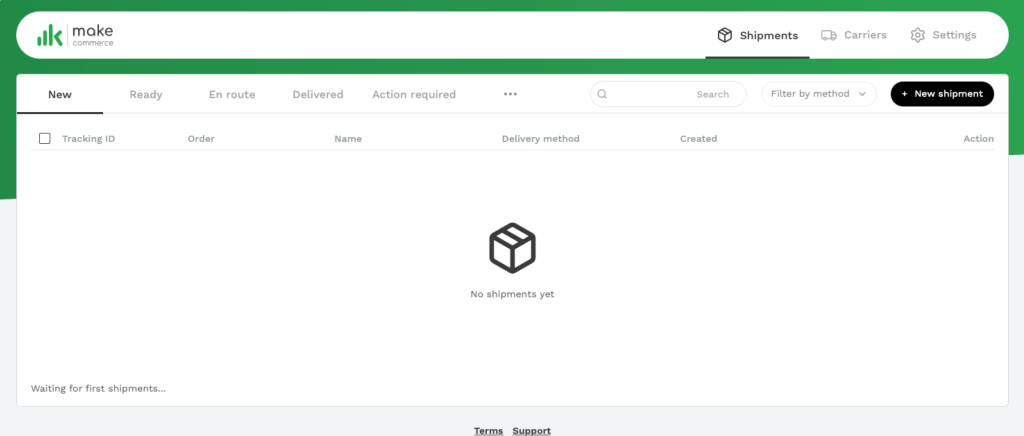
4. Enable theme integration
The last step is to configure the Shopify Theme settings. Go to Online Store -> Themes and click Edit theme:
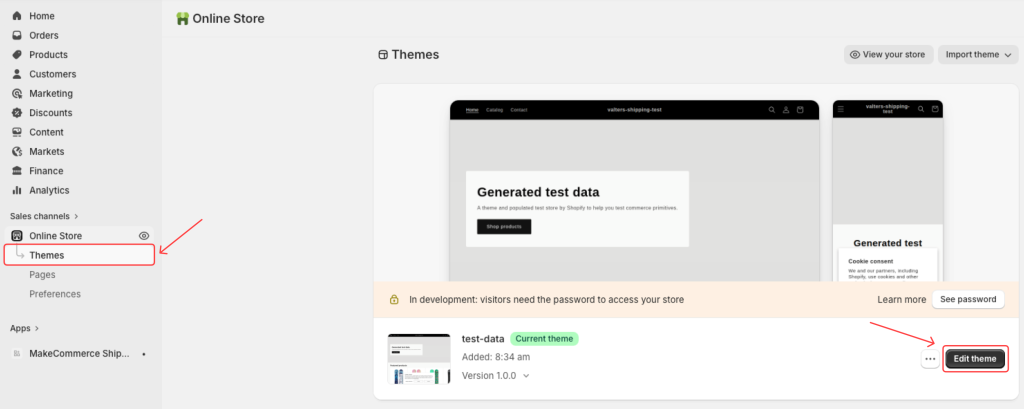
In the App embeds section, enable MakeCommerce Shipping and save the changes:
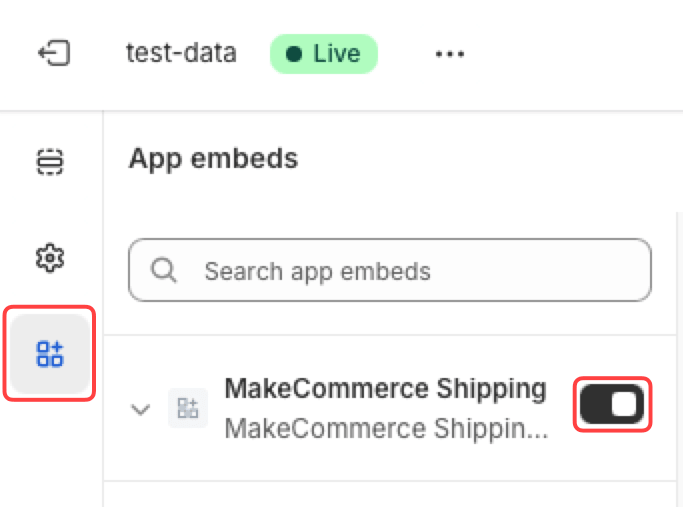
Additionally, make sure that the Shopify Theme cart type is set to Page:
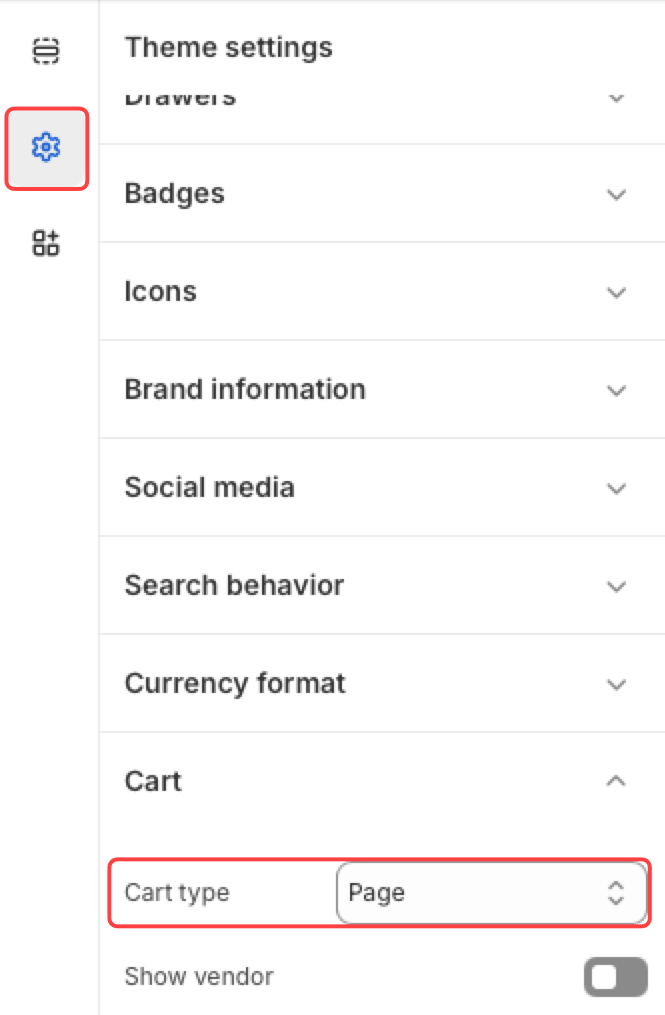
🔄 Migration from old module
Move to Shipping+
If your shop still runs the old MakeCommerce Shipping Solution app, we highly recommend migrating, as support for the old version is ending soon. Your shop’s delivery menu will not work while the migration runs, and the migration itself usually takes around 15 minutes.
- Open the old MakeCommerce Shipping Solution app in your Shopify admin, open the Other menu and choose Migration.
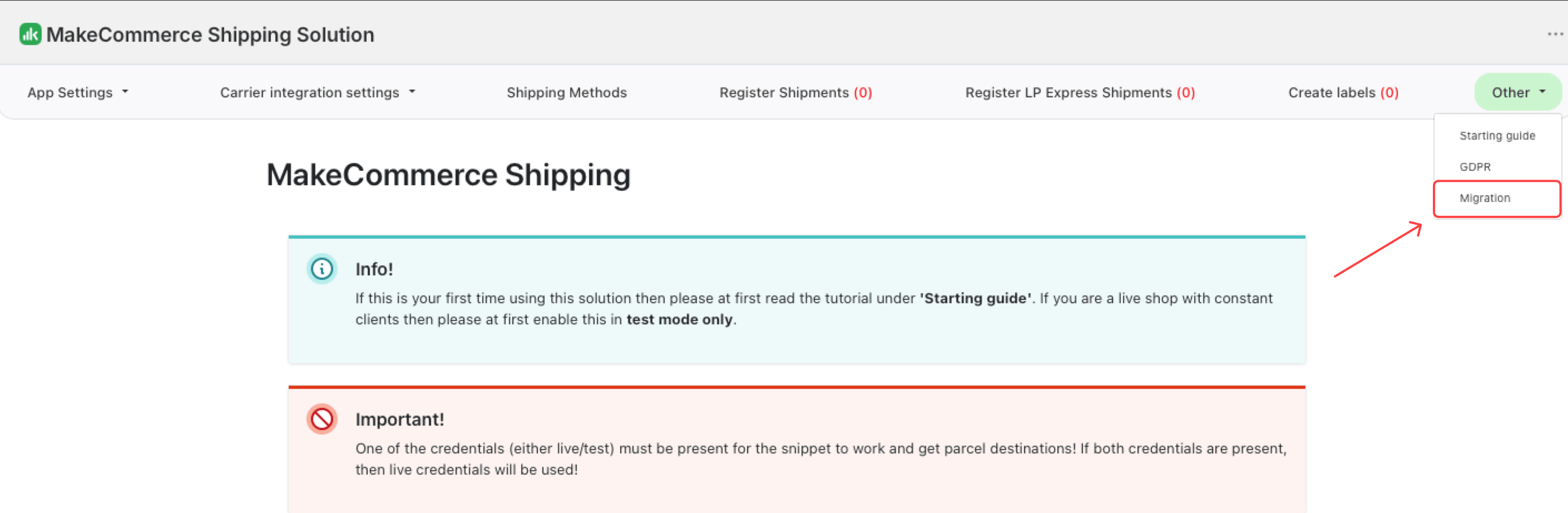
- Read Changes in the new version. It lists everything that works differently after migrating, summarised below.
- Read the red Important notice underneath, then tick I have read and understood the changes and agree to the terms and fees.
- Click Continue Migration.
- Your delivery setup is not carried across. Work through Setting up delivery methods and Carrier settings in this tutorial to get rates showing in the cart again.
carrierName_country_method, for example omniva_lv_pickuppoint. The names your old setup used will not match. Go through Shipping and delivery in Shopify and rename or recreate every rate in each zone. Until that is done, no delivery methods appear in the cart. See the naming examples.What changes in the new version
- Modern cart design, no manual styling required – the manual design options are replaced by an automated checkout layout that stays consistent and up to date.
- Automatic shipment tracking – shipments are tracked for you, so you can follow delivery status and spot problems.
- Seamless multilingual support – no manual translations needed, all texts are localised for your customers automatically.
- Support for Venipak and Unisend – two more carriers are fully integrated.
- Third-party carrier support – shipping methods from other providers can appear in the checkout alongside MakeCommerce carriers.
- Simplified carrier setup – shipping methods still have to be configured in Shopify shipping zones, but the process is considerably easier.
- Terms and conditions checkbox removed – the RA Term and Condition Checkbox app is supported instead.
📋 Setting up delivery methods
Next, you need to set up delivery zones.
Required setup steps
- Go to the Carriers section:
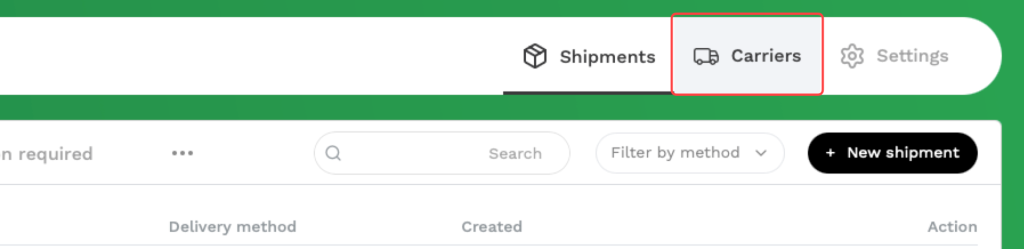
- Select the desired carrier:

- You can configure the settings you need:
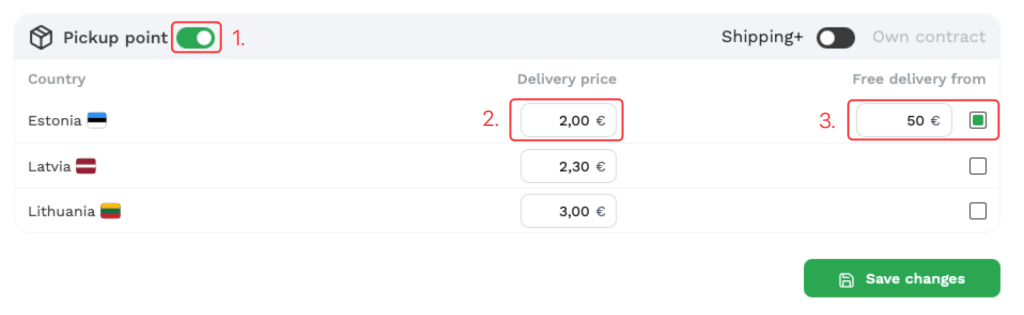
- Enable the delivery method
- Specify the delivery price
- Set free delivery from amount X
- Save the settings.
- Next, you need to open the Shopify settings:
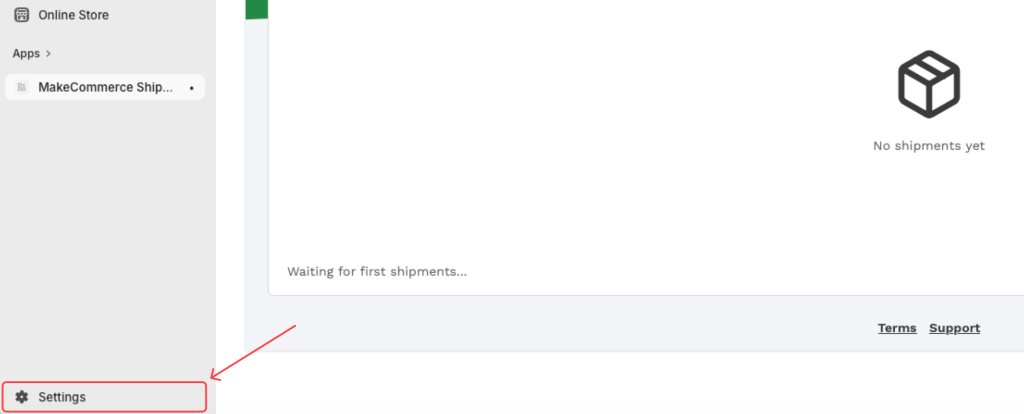
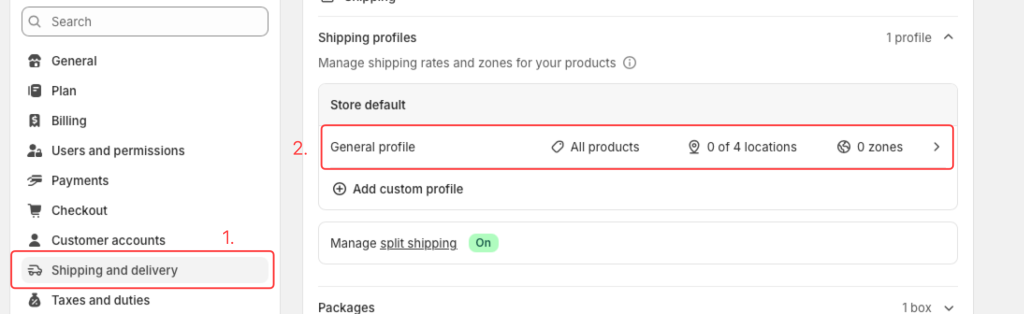
- Open the Shipping and delivery section. Then select the desired delivery profile.
- Create a new Shipping Zone if needed; otherwise add a new Shipping Rate:
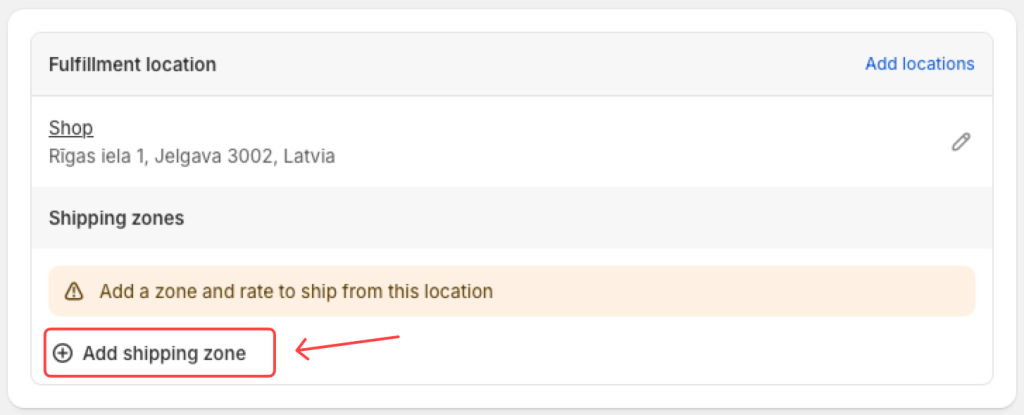
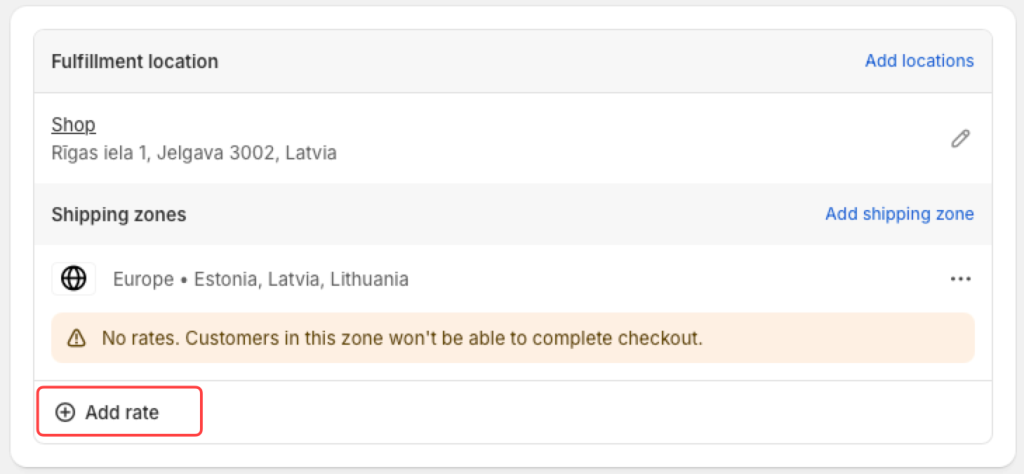
- You need to add a new Shipping Rate for each delivery method:
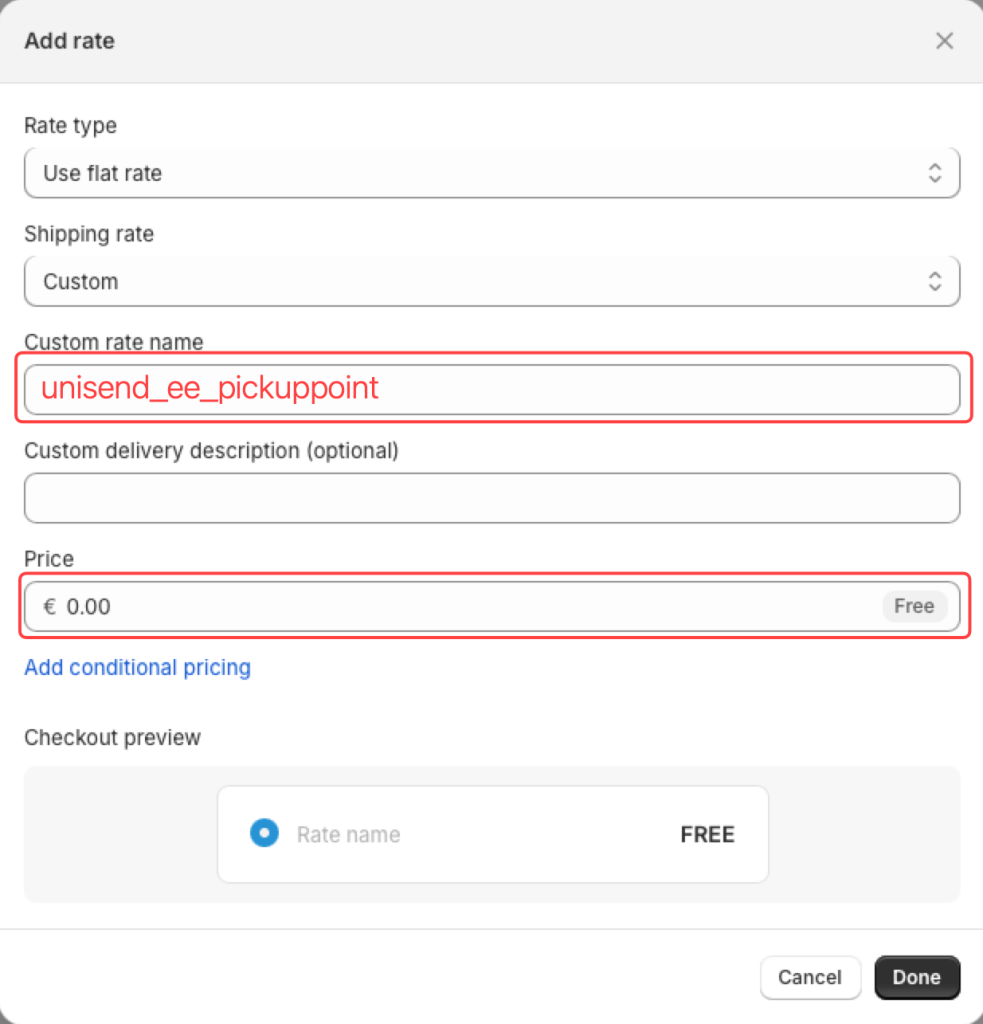
Carrier code examples
 Omniva
Parcel Locker
| 🇱🇻 Latvia | omniva_lv_pickuppoint |
| 🇱🇹 Lithuania | omniva_lt_pickuppoint |
| 🇪🇪 Estonia | omniva_ee_pickuppoint |
Courier
| 🇱🇻 Latvia | omniva_lv_courier |
| 🇱🇹 Lithuania | omniva_lt_courier |
| 🇪🇪 Estonia | omniva_ee_courier |
 DPD
DPD
Parcel Locker
| 🇱🇻 Latvia | dpd_lv_pickuppoint |
| 🇱🇹 Lithuania | dpd_lt_pickuppoint |
| 🇪🇪 Estonia | dpd_ee_pickuppoint |
Courier
| 🇱🇻 Latvia | dpd_lv_courier |
| 🇱🇹 Lithuania | dpd_lt_courier |
| 🇪🇪 Estonia | dpd_ee_courier |
 Unisend
Parcel Locker
| 🇱🇻 Latvia | unisend_lv_pickuppoint |
| 🇱🇹 Lithuania | unisend_lt_pickuppoint |
| 🇪🇪 Estonia | unisend_ee_pickuppoint |
Courier
| 🇱🇻 Latvia | unisend_lv_courier |
| 🇱🇹 Lithuania | unisend_lt_courier |
| 🇪🇪 Estonia | unisend_ee_courier |
 Venipak
Parcel Locker
| 🇱🇻 Latvia | venipak_lv_pickuppoint |
| 🇱🇹 Lithuania | venipak_lt_pickuppoint |
| 🇪🇪 Estonia | venipak_ee_pickuppoint |
Courier
| 🇱🇻 Latvia | venipak_lv_courier |
| 🇱🇹 Lithuania | venipak_lt_courier |
| 🇪🇪 Estonia | venipak_ee_courier |
 Smartposti
Parcel Locker
| 🇱🇻 Latvia | smartposti_lv_pickuppoint |
| 🇱🇹 Lithuania | smartposti_lt_pickuppoint |
| 🇪🇪 Estonia | smartposti_ee_pickuppoint |
Courier
| 🇱🇻 Latvia | smartposti_lv_courier |
| 🇱🇹 Lithuania | smartposti_lt_courier |
| 🇪🇪 Estonia | smartposti_ee_courier |
Enabling Shop pickup delivery method
To enable the Shop pickup delivery method, no additional setup is required in the MakeCommerce module.
You only need to enable the Pickup in store method in Shopify settings under Shipping and delivery, under Additional delivery methods:
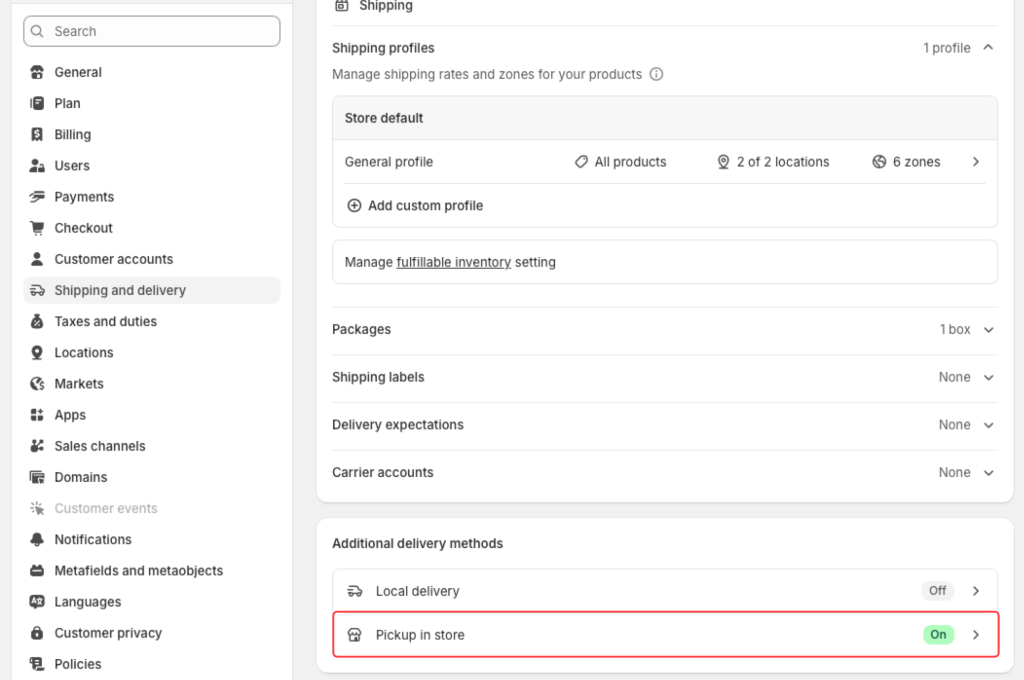
After enabling it, the Pickup in store option should automatically appear in the cart and checkout.
Hiding parcel machine options for certain products
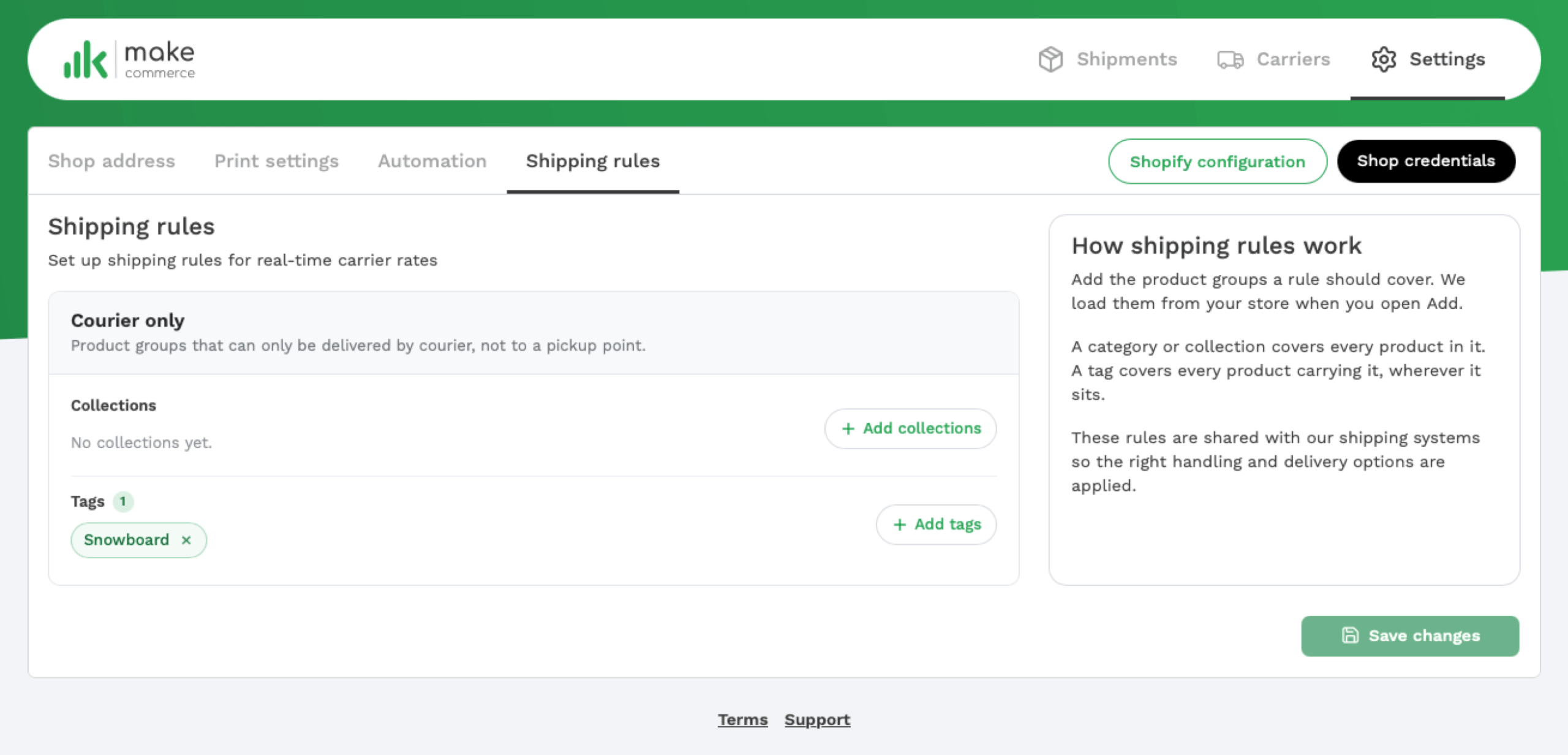
Under Settings -> Shipping rules, use the Courier only card to hide parcel machine methods for products that do not fit in a parcel machine.
- Add Shopify groups with + Add collections or + Add tags.
- Remove a group with × and click Save changes.
Adding additional courier delivery methods
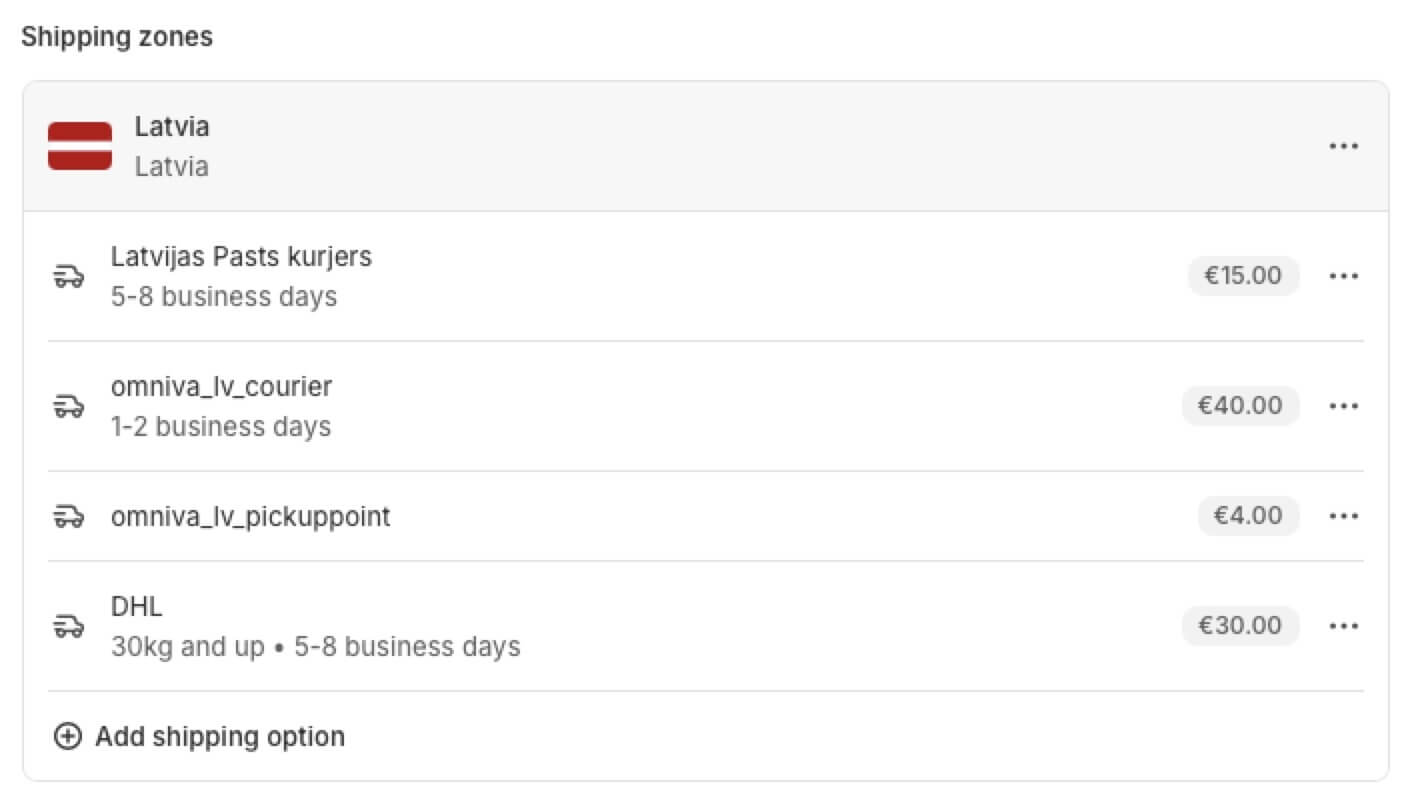
For extra courier methods such as DHL, UPS or your own courier, add a rate in Shopify under Settings -> Shipping and delivery -> Shipping zones. These shipments are not registered automatically, but can be handled manually in Shopify orders.
- Configure the local or international shipping zone in Shopify.
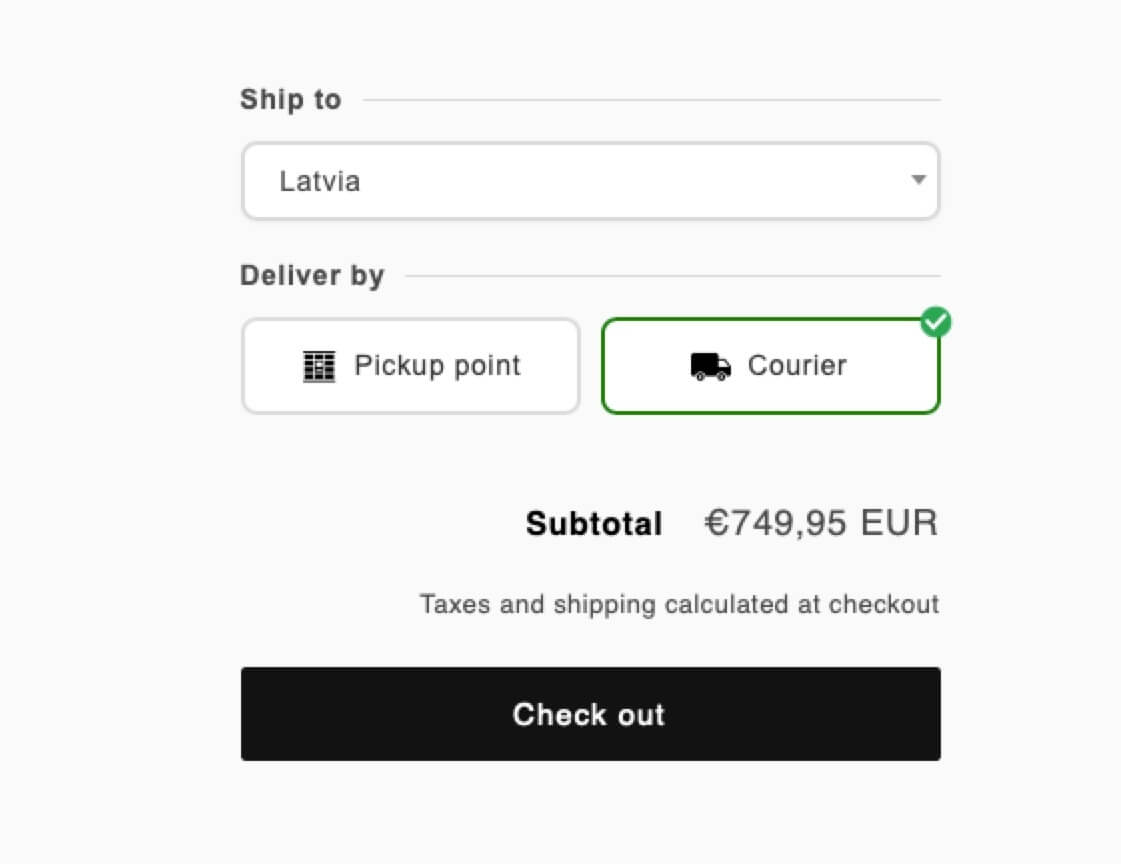
- In the cart, the customer sees the generic Courier option.
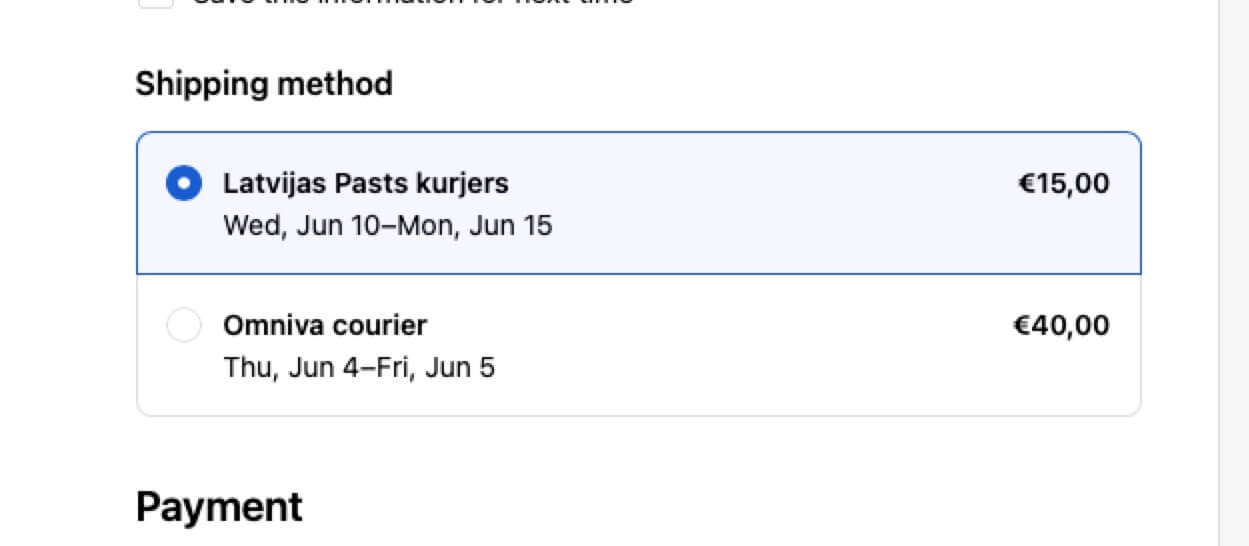
- At Shopify checkout, configure the name, price, weight limits, free-delivery threshold, countries and regions for each method.
📦 Managing shipments
In the MakeCommerce shipping dashboard you have all the tools you need to manage your shipment processing.
Label printing & editing
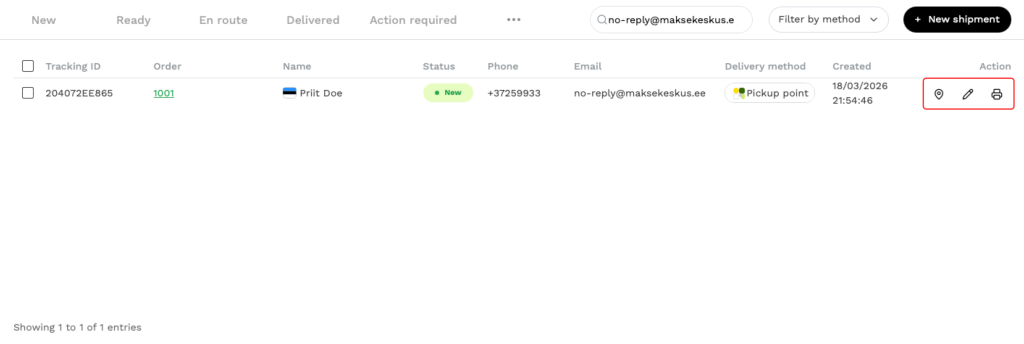
Every shipment row ends with an Action column holding three icons:
- 📍 Track – opens the carrier’s tracking for that parcel.
- ✏️ Edit – opens the shipment details so you can correct the recipient, address or delivery method.
- 🖨️ Print label – creates and prints the label for that one shipment.
Filtering
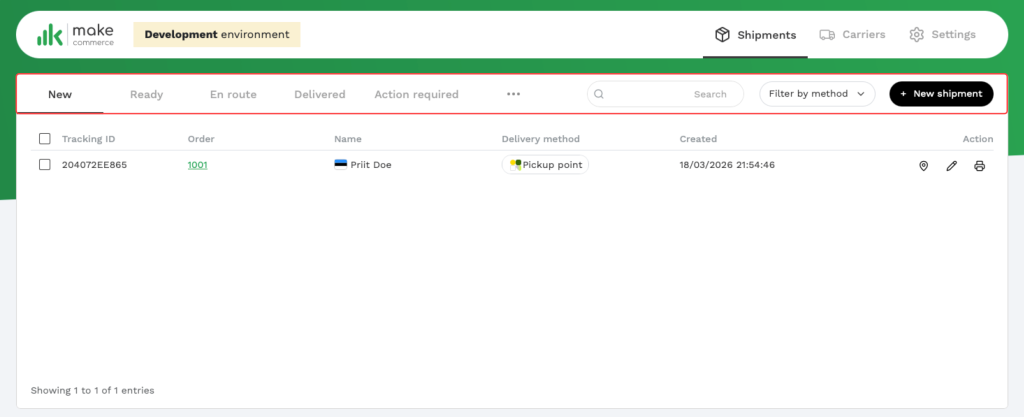
The row of tabs across the top of the shipment list filters by status. Click a tab to see only those shipments:
- New – unprocessed shipments that have come in
- Ready – shipments that are ready to be shipped
- En route – shipping in progress
- Delivered – shipments that have already been delivered
- Action required – an issue has arisen with the shipment that requires your attention
- ⋅⋅⋅ – other shipment status filters
Two more controls sit to the right of the tabs:
- Search – finds shipments by
Order ID,tracking number,email,phone numberorname. - Filter by method – narrows the list to one delivery method, for example only parcel machine or only courier shipments.
The filters stack, so you can open Ready and then filter it down to a single delivery method before printing.
Manual shipment creation
Create a shipment by hand when an order has to be split into two parcels, or when you are sending the customer a replacement or an extra product.
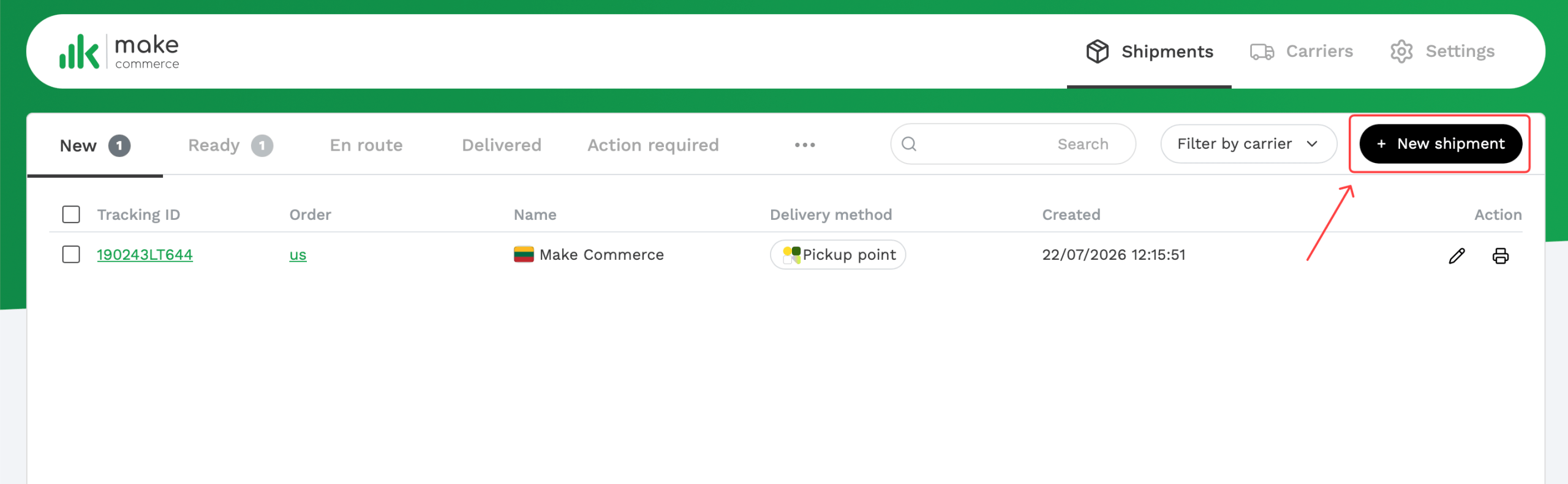
- On the shipment list, click + New shipment at the top right.
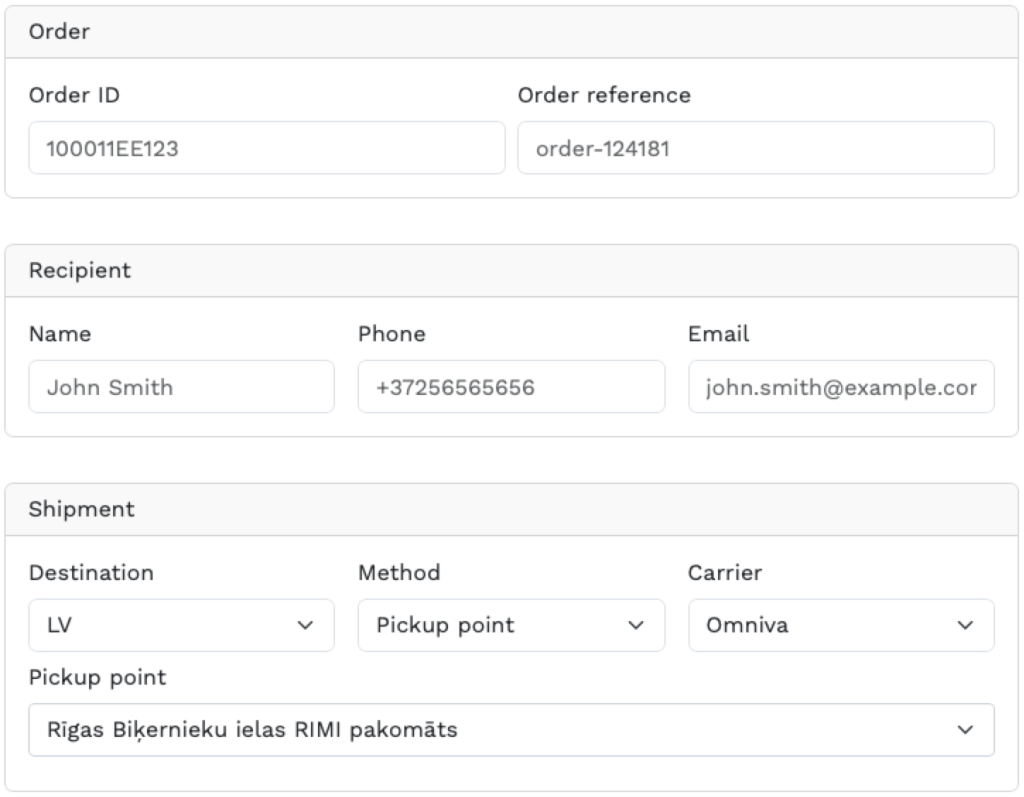
- Under Order, fill in Order ID and Order reference so the parcel can be traced back to the original order.
- Under Recipient, fill in Name, Phone and Email. The carrier uses the phone and email to notify the customer.
- Under Shipment, choose the Destination country, the Method (pickup point or courier) and the Carrier.
- If you picked a pickup point method, a Pickup point dropdown appears underneath. Choose the parcel machine the customer wants.
- Save the shipment. It appears in the list under New, ready for its label to be printed.
Bulk printing
- Tick the checkbox in the first column for each shipment you want a label for. The checkbox in the header row selects everything currently listed.
- An action bar appears at the bottom of the list. Click Print labels.
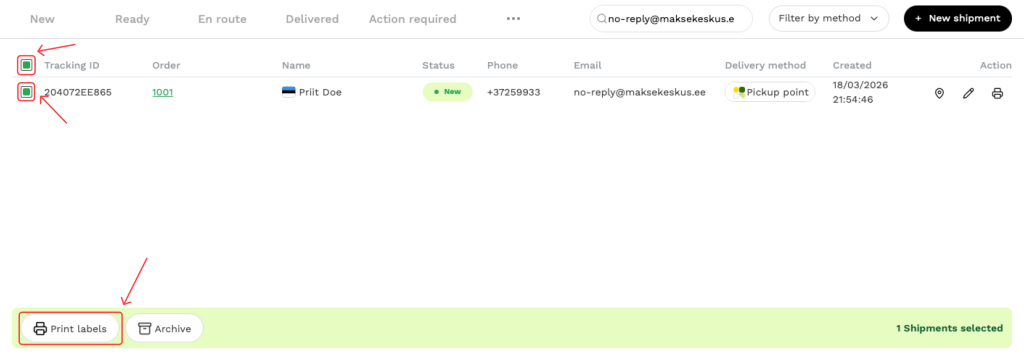
All the selected labels come out in one file, laid out according to the size you chose under Print settings. Filter the list first, by status or delivery method, so you only print what you are packing right now.
Calling a courier
As your shipping volumes grow, you can use the courier pickup feature. The carrier’s courier comes to collect all of your parcels and shipments. Calling a courier is a paid service – 4 € + VAT per pickup.
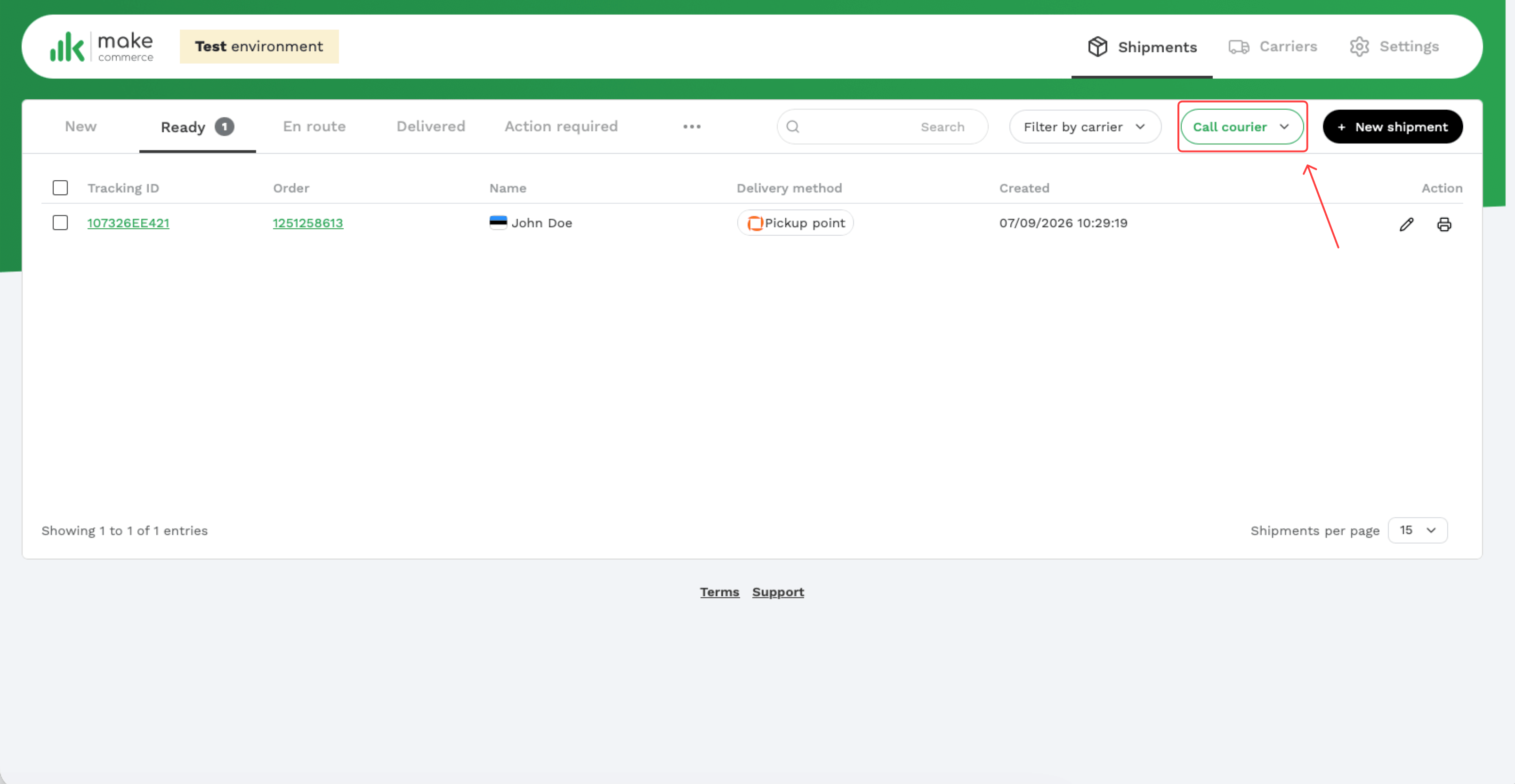
- At the top of the shipment list, click Call courier.
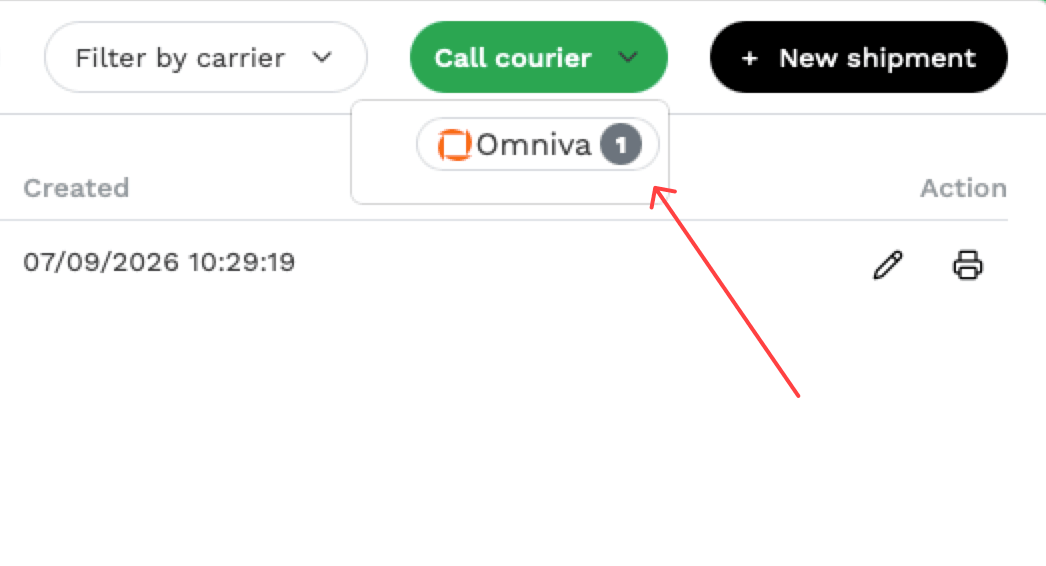
- Choose the carrier whose courier you want to call. The number of shipments available for collection is shown next to each carrier.
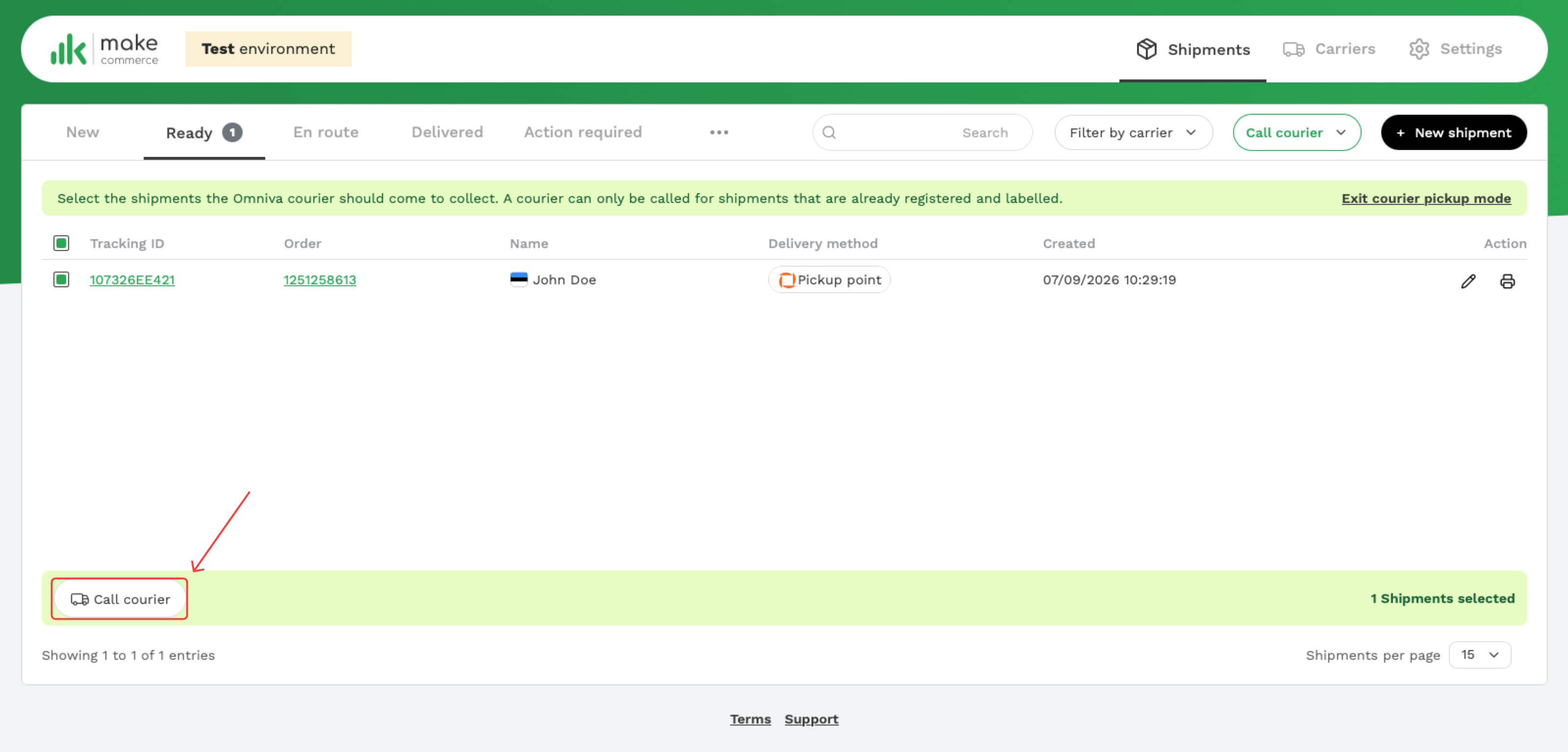
- Tick the shipments the courier should collect and click Call courier at the bottom of the list. To cancel, click Exit courier pickup mode.
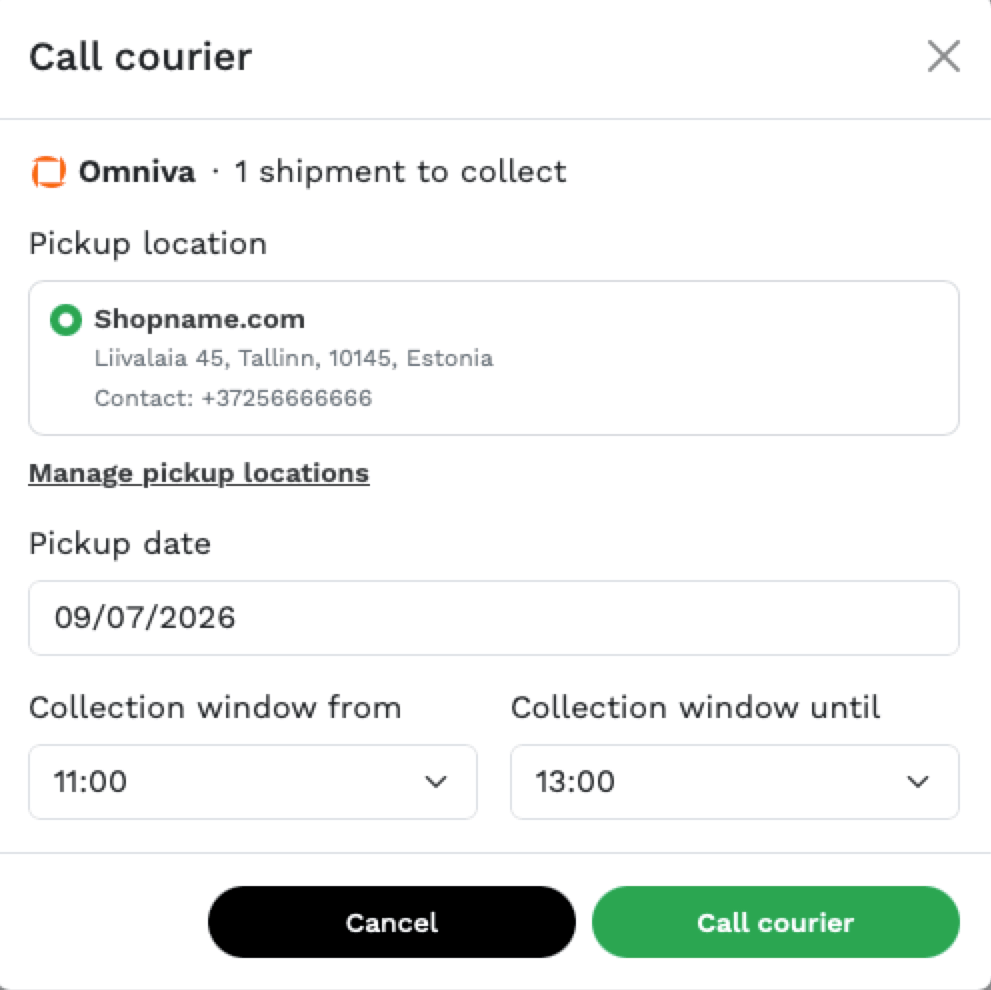
- Check the request details and confirm by clicking Call courier:
- Pickup location – the address the courier collects the shipments from. Use Manage pickup locations to edit existing pickup addresses or add new ones.
- Pickup date – the date the courier should arrive.
- Collection window from / until – the time window in which the courier can arrive.
Archiving shipments
Archiving hides a shipment from the list once it is no longer relevant, for example a cancelled order or a duplicate you created by mistake.
- Tick the checkbox next to each shipment you want out of the way.
- In the action bar at the bottom of the list, click Archive.
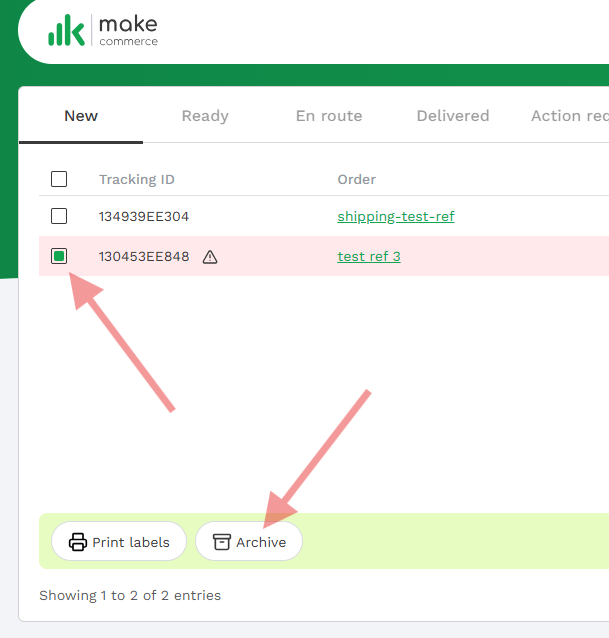
Archiving only affects what you see in the app. It does not cancel a registered shipment with the carrier and it does not change the order in Shopify.
🚚 Carrier settings
In the Carriers page you can setup your carriers settings just the way you want.
Editing carriers
This is where you turn delivery methods on, price them per country, and decide whose contract each method runs on.
- Open Carriers and pick the carrier from the logo row along the top.
- Each delivery method gets its own card – Pickup point and Courier. Use the toggle beside the method name to switch that method on or off.
- Use the Shipping+ / Own contract switch on the right of the card to choose whose contract that method uses.
- In the table, set the Delivery price for each country you ship to.
- To offer free delivery above a certain cart value, tick the box in the Free delivery from column and enter the amount.
- Click Save changes.
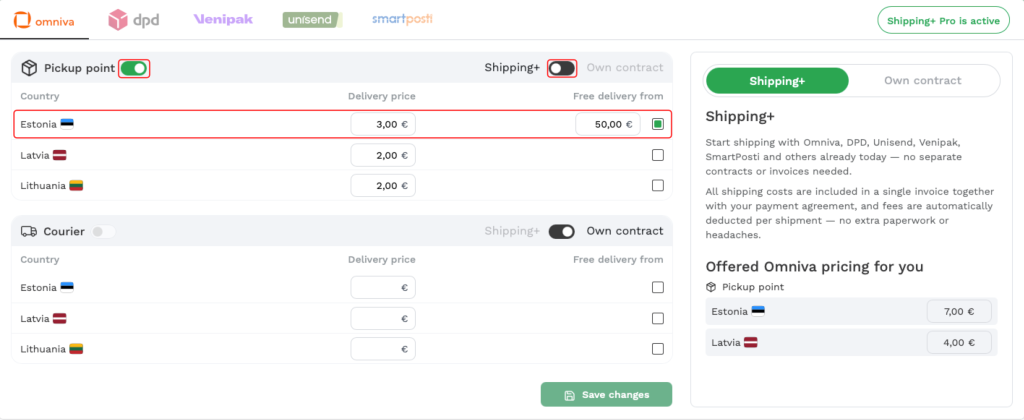
Enabling courier delivery method
Courier delivery runs on your own carrier contract, so it needs Shipping+ Pro active and your carrier credentials connected.
- Click Activate Shipping+ Pro. Once it is active, a Shipping+ Pro is active badge appears at the top right of the Carriers page.
- Open Carriers and pick the carrier you have a contract with.
- On that carrier’s Courier card, flip the switch on the right to Own contract.
- The panel on the right changes to Use your existing carrier agreements. Under Connect to your carrier account, enter your Username and Password from that carrier, then click Connect.
- With the credentials connected, turn on the toggle beside Courier and set the Delivery price per country.
- Click Save changes.
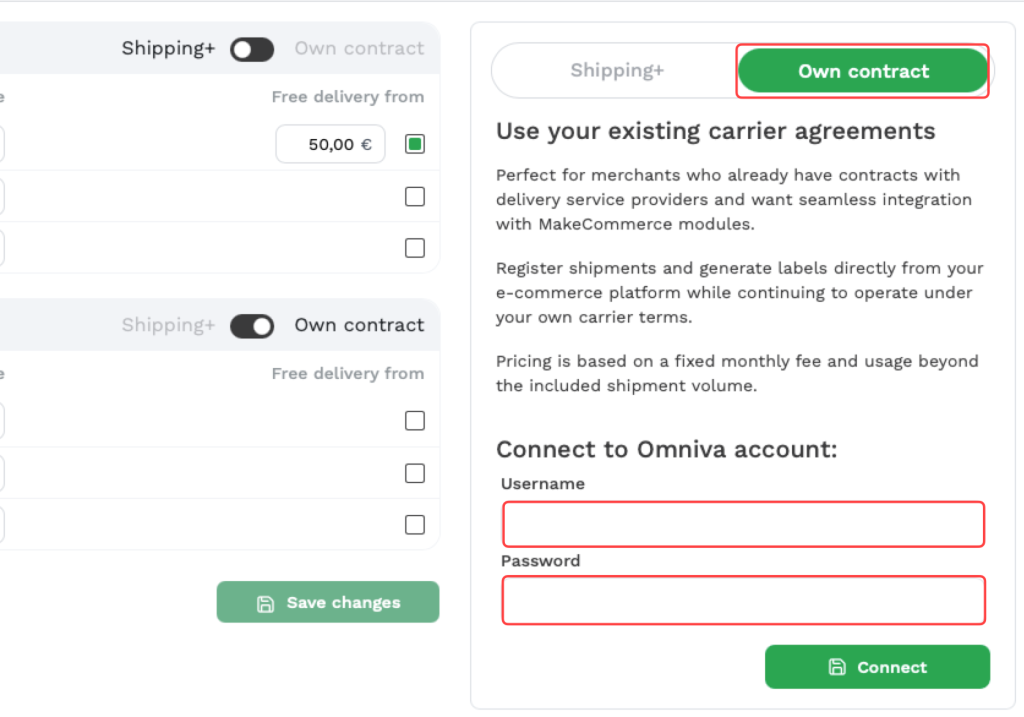
Repeat this for each carrier whose courier you want to offer. You can keep parcel machines on Shipping+ and run only the courier on your own contract.
What is Shipping+?
Shipping+ is MakeCommerce’s all-inclusive shipping service where you use MakeCommerce’s own delivery contracts and prices instead of signing contracts with each carrier yourself.
In practice, this means:
- You get access to local parcel machines out of the box: Omniva, DPD, Venipak, Unisend, and Smartposti
- You do not need separate contracts or credentials with each delivery company
- You get one unified pricing model from MakeCommerce: one price per parcel size per carrier, instead of each carrier having its own complex pricing tables
In short: Shipping+ gives you competitive shipping rates at any scale, avoids carrier negotiations, and helps you launch faster.
What is Shipping+ Pro and own contracts?
Shipping+ Pro is for merchants who want to keep using their own carrier contracts, but still want automation and MakeCommerce shipping tools.
Keep your existing terms with each carrier and get 100 delivery registrations included every month for 5 €, then 0.05 € per extra delivery registration.
In practice:
- You connect your own Omniva / DPD / Venipak / … credentials to MakeCommerce
- You keep your own negotiated shipping prices and conditions with carriers
- MakeCommerce handles automatic shipment registration after orders are paid, plus label creation and tracking
- You pay a small monthly subscription plus a per-label fee for that automation
In short: Shipping+ Pro lets you use your own carrier deals, automate shipping, and keep costs low with small fees.
⚙️ Other settings
Everything under the app’s Settings page: your sender address, label size, when Shopify counts an order as fulfilled, and which products are courier only.
Shop address
This is the address used as the sender’s address and as the address returns come back to. It is also what gets printed on the shipping label.
- In the app, open Settings and then the Shop address tab.
- Fill in the fields:
- Sender – the shop name the customer sees on the label.
- Mobile phone and Email – the contact details the carrier uses if there is a problem with the parcel.
- Address, City and Zip – where parcels are sent from and where returns are delivered back to.
- The Shop address panel on the right previews the label as you type, so you can check the sender block before saving.
- Click Save changes.
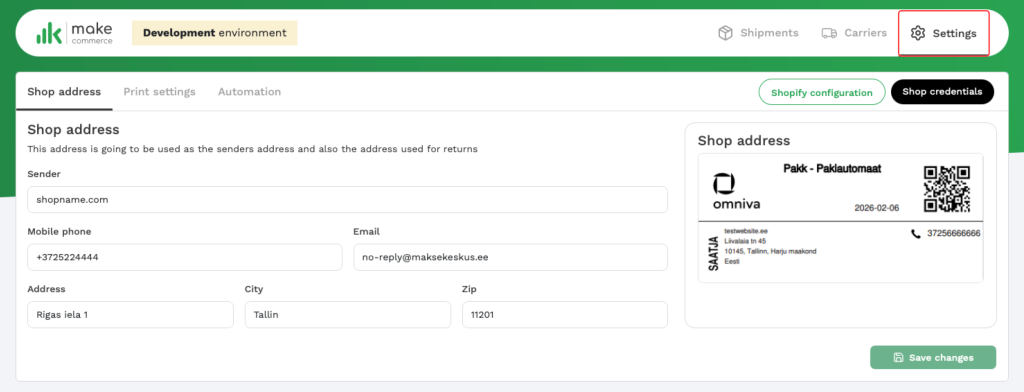
Print settings
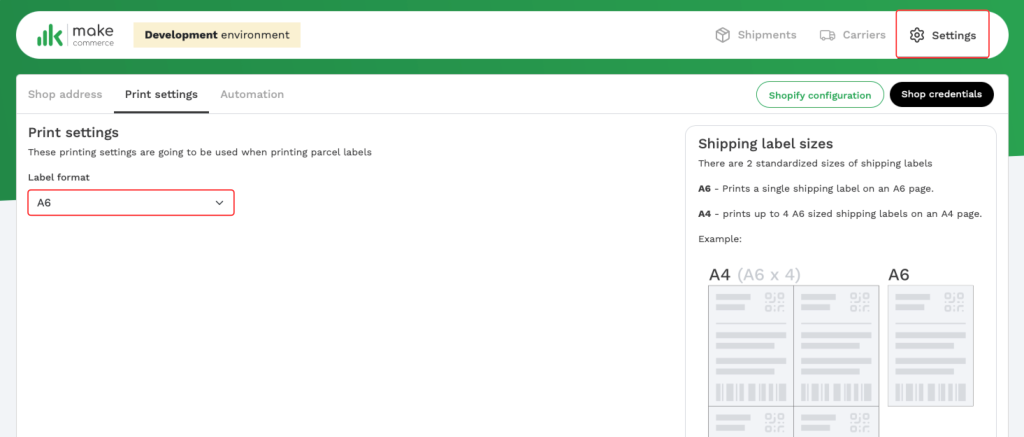
This is the label size the system uses every time you print, whether you print one label or a whole batch.
- In the app, open Settings and then the Print settings tab.
- Open the Label format dropdown and pick the size that matches your printer:
- A6 – prints a single shipping label on an A6 page. This is the one to pick if you have a dedicated label printer.
- A4 – prints up to 4 A6-sized shipping labels on one A4 page. This is the one to pick if you print on an ordinary office printer and cut the sheet.
- Click Save changes.
When Shopify marks the order as fulfilled
You can choose at which point in the shipment’s journey the Shopify order is marked as fulfilled. This matters because fulfilling an order is what triggers Shopify’s own shipping confirmation email to the customer.
- In the app, open Settings and then the Automation tab.
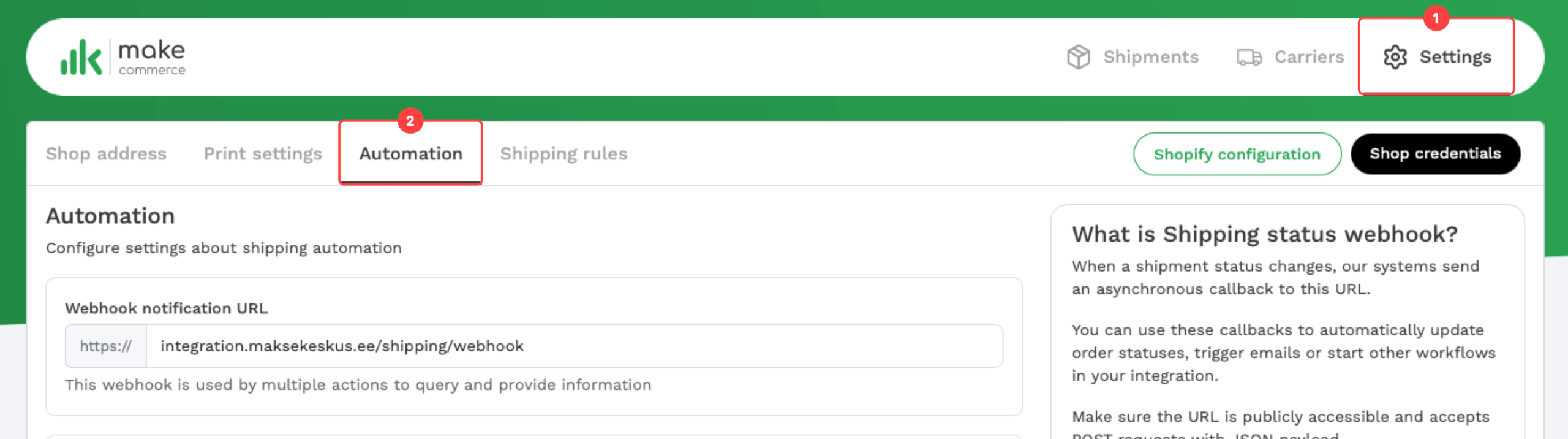
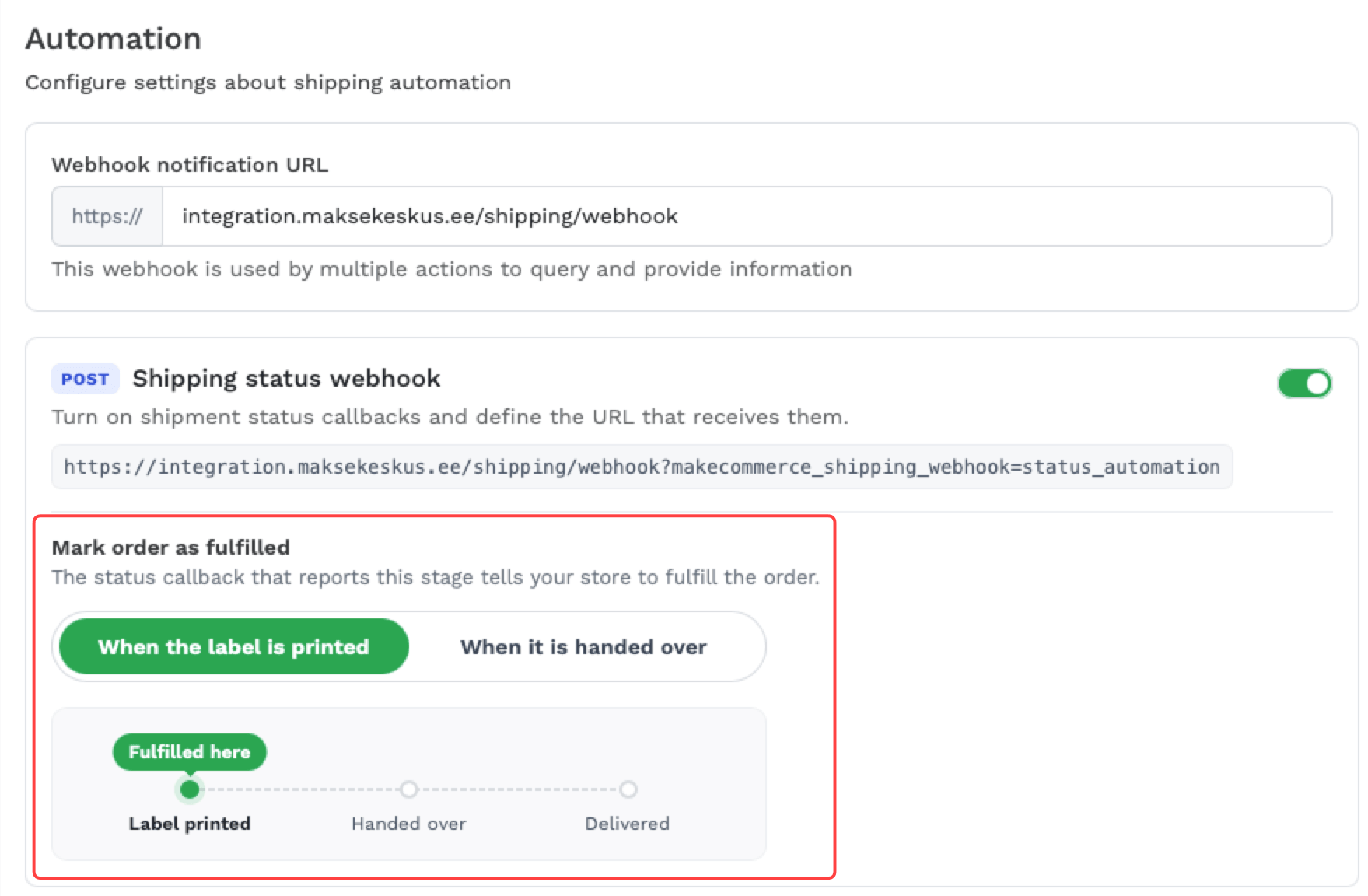
- Make sure Shipping status webhook is switched on – the fulfillment setting lives inside it.
- Under Mark order as fulfilled, choose when it should happen:
- When the label is printed – the order is fulfilled the moment the shipping label is created and printed. The customer hears from Shopify straight away, while the parcel is still with you.
- When it is handed over – the order is only fulfilled once the parcel has actually been handed to the courier or dropped off at a parcel machine and the carrier has registered it.
- The timeline underneath shows where fulfillment lands. The Fulfilled here marker moves along Label printed -> Handed over -> Delivered as you switch between the two options.
- Click Save changes.
You can find the previous tutorial here:
Old Shopify delivery module tutorial
Add MakeCommerce to your Shopify store
If you’re not our merchant yet, share your contact details and we’ll assist you with onboarding and help you complete the Shopify payment integration.